
Investigation: Neuroscience & Architecture
Increasingly, scientific evidence supports the assertion that our environment has a tremendous effect on our health and well-being, and that much of this has to do with how our brain and senses interact with the spaces we inhabit. As architects, how can we use this scientific evidence to support or inform our design decisions, so that we can create healthier, more meaningful places? Neuroscience may provide an answer.
February 16, 2025
A Survey of Emerging Neuroscience Research for Designers
This Investigation sought to answer the question of how neuroscience research can help architects to create healthier and more meaningful spaces for occupants, whether through providing insights into how humans perceive the built environment, or describing aspects of the creative process of design itself.
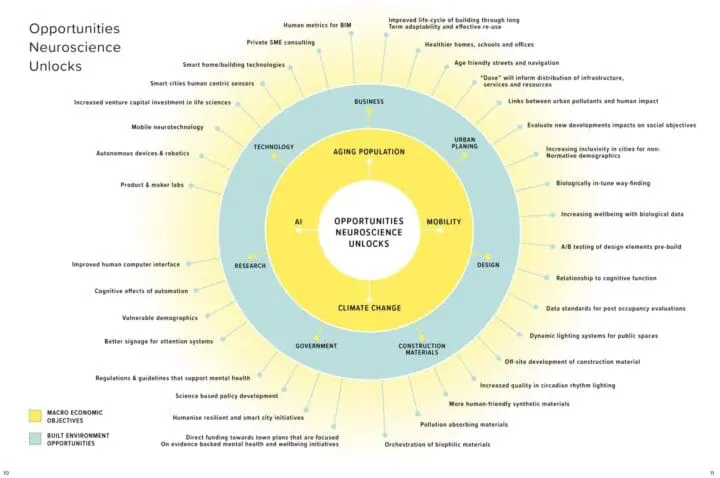
The best thing we can do as architects is to try to connect building inhabitants with natural rhythms by using daylight and color temperature, and by encouraging physical movement. Another important design consideration is to try to connect building users to the outdoors: a more immersive experience is better. As architects, we ought to engage with psychologists and neuroscientists to continue to study stress and learn what are the spatial qualities that affect stress responses.